


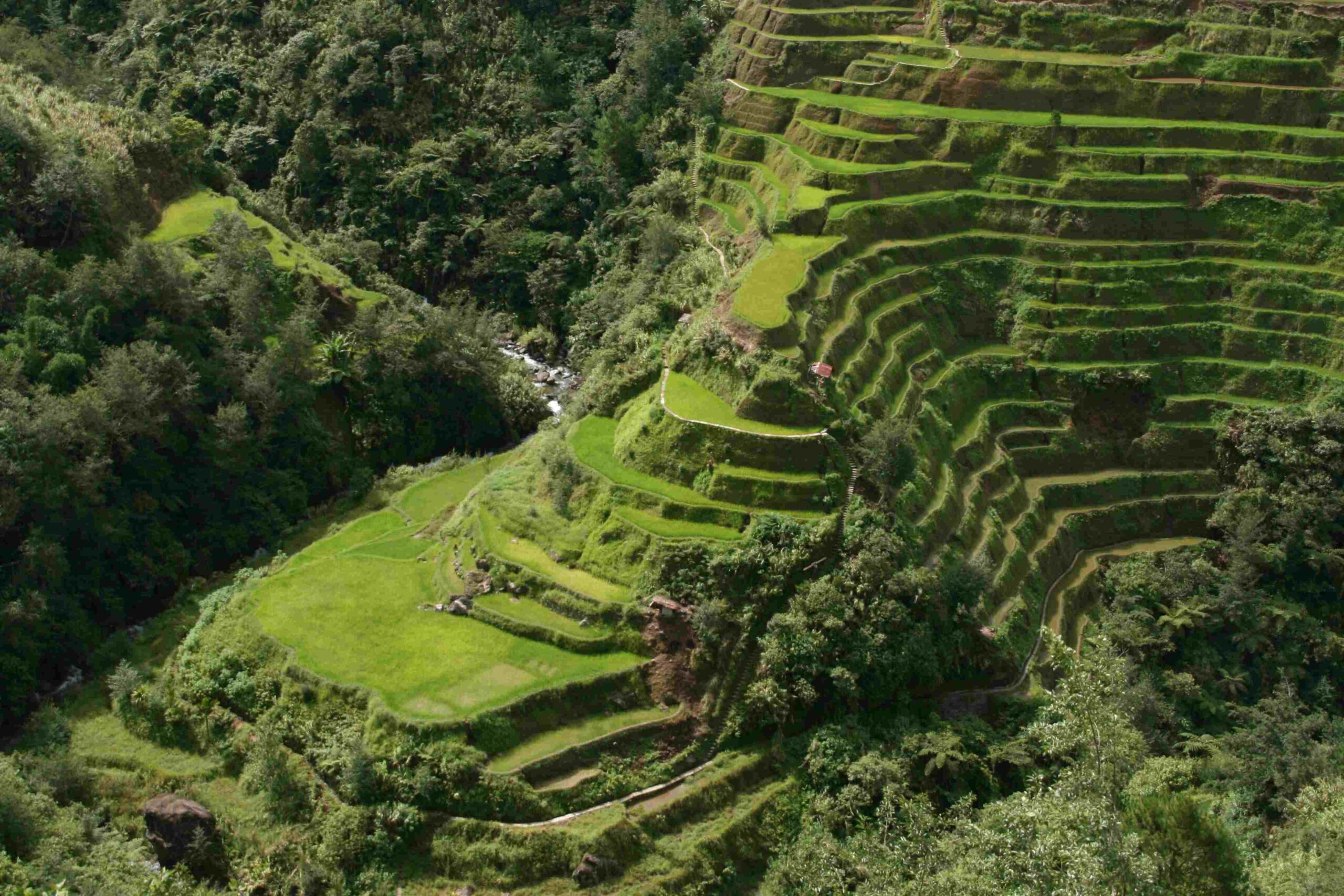
Banaue Rice Terraces: The Eighth Wonder of the World
I’ve been to Banaue twice, first around 2005 and again in 2012, and both times I was absolutely blown away. This is easily one of my top three places to visit in the Philippines.
Banaue is in Ifugao province in the Cordillera, about 350 km north of Manila, and roughly nine to eleven hours by road.
The rice terraces are commonly referred to as the Eighth Wonder of the World, and when you see them, you’ll understand why.
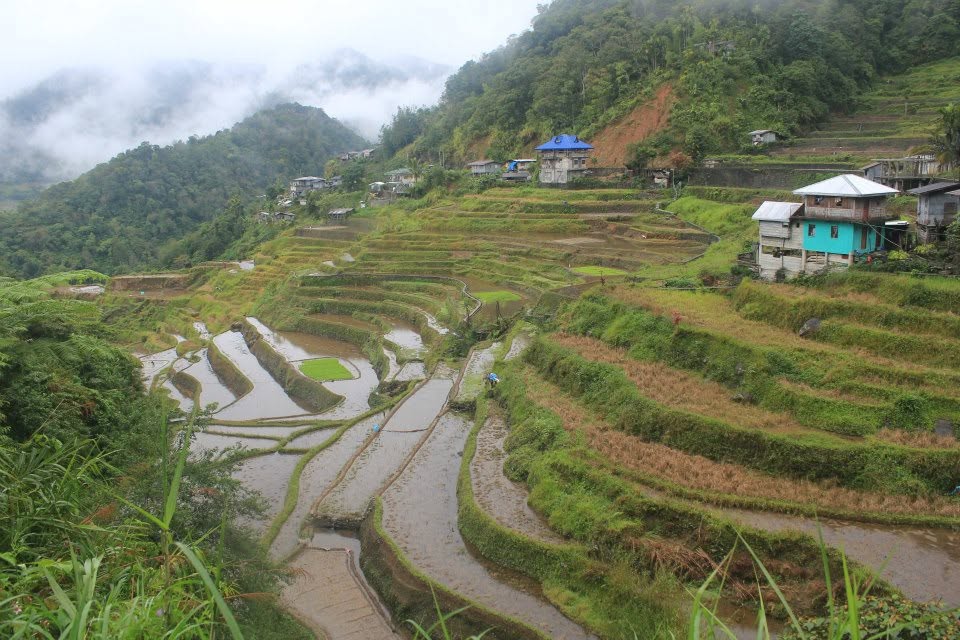
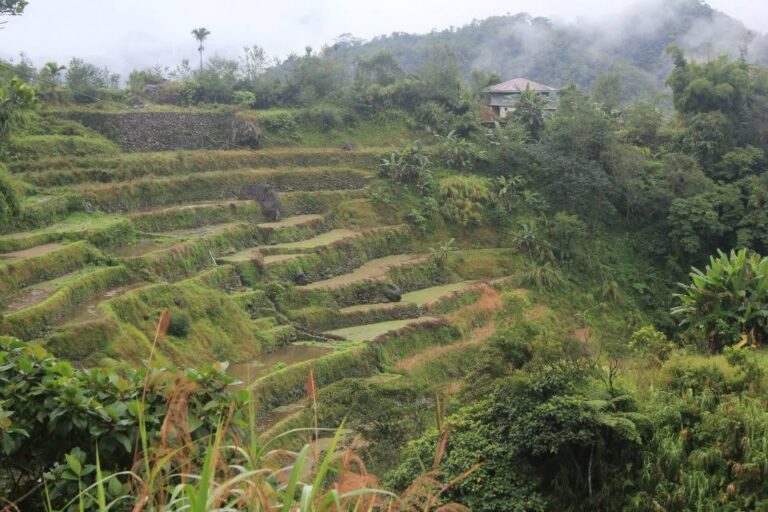
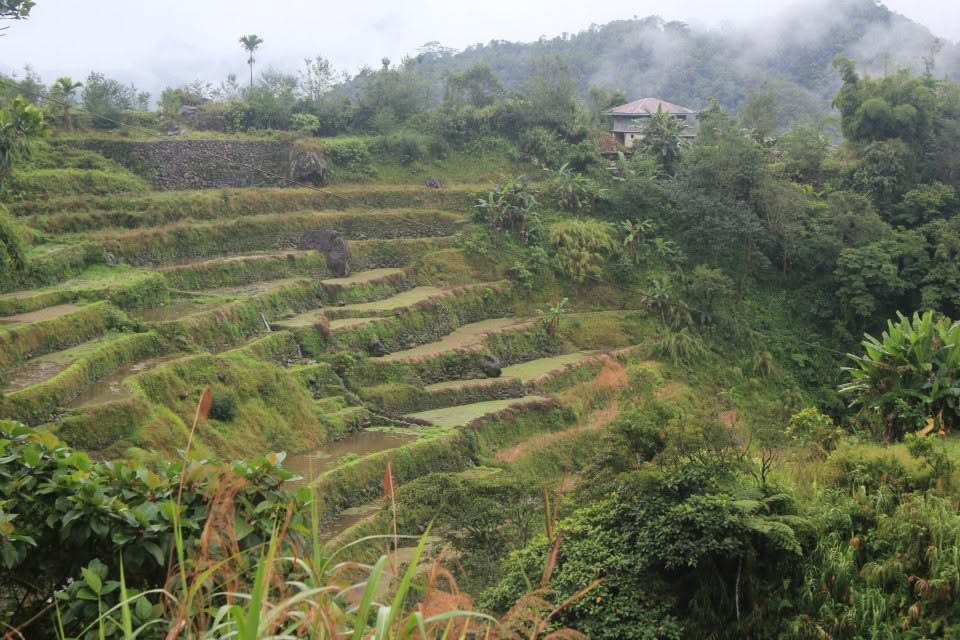
What really got me was the sheer scale of the whole thing. You’re driving along these winding mountain roads, with terraces stretching above and below you, right across the mountainsides and disappearing into the hazy distance. Everywhere you look, there are more of them. Every single square metre of mountainside has a rice terrace built into it.
Then you think about the effort involved in building them, the engineering, the irrigation systems and the generations of Ifugao people who’ve maintained them. It’s absolutely mind-blowing.
Some of the terraces are traditionally said to be around 2,000 years old, although their exact age is debated. Whatever their age, they’re an incredible example of human ingenuity.
Best Time to Visit Banaue
Choosing the right time of year makes a massive difference, particularly if you want to take some photos of the terraces.
- March to April: Generally drier weather and a good time for exploring, although the terraces may not be at their greenest.
- May to June: Increasingly green landscapes in some areas, with warmer temperatures and more frequent rain.
- July to October: Lush scenery, but also the wettest conditions, with fog, slippery trails and possible landslides.
- November to February: Cooler and generally drier, although harvested terraces may appear brown or flooded rather than green.
When I visited in both December and February, I remember quite a bit of fog and mist hanging around the mountains. It didn’t ruin the experience, but it certainly affected the photo opportunities.
My recommendation: I’d aim for March or April for more favourable travelling conditions. If lush green terraces are your priority, consider May or June, keeping in mind that planting schedules vary between locations.
Things to Do in Banaue
Banaue is really a base camp. The terraces everyone knows from the photos are spread across the surrounding mountains, so the real question is how you spend your time among them. I’ve visited both Batad and Bangaan, along with several smaller terraces around Banaue, and each one gives you something different. Some were so close to the road that we could simply stop the car, get out and have a wander. Others take a proper walk to reach. If you only have a couple of days, Batad is the one not to miss, Bangaan and the viewpoints are the easy wins, and Tappiya Waterfall is the optional extra for anyone with the legs for it.
Batad Rice Terraces
Batad is the one that stops people in their tracks. The terraces curve around the village in a giant amphitheatre, stacked so steeply and so neatly that it looks designed rather than dug by hand. They’re stone-walled, said to be around two thousand years old, and still farmed today. No road reaches the village, which is a big part of the appeal. There’s no traffic noise, just running water, roosters and the odd farmer heading out to the paddies.
-
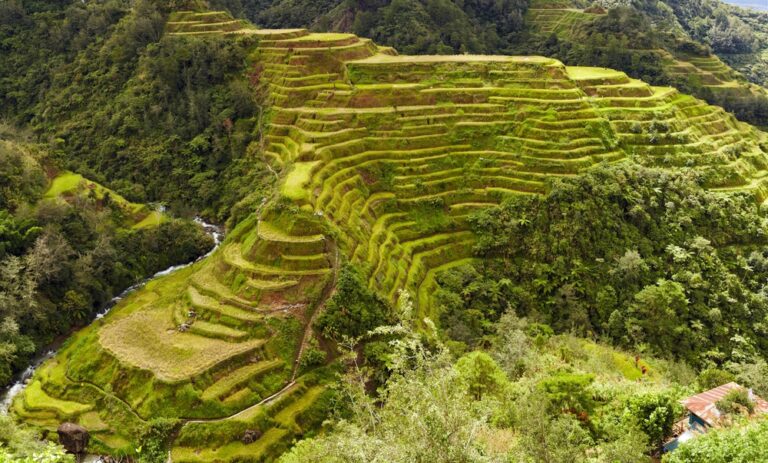
- Batad Rice Terraces
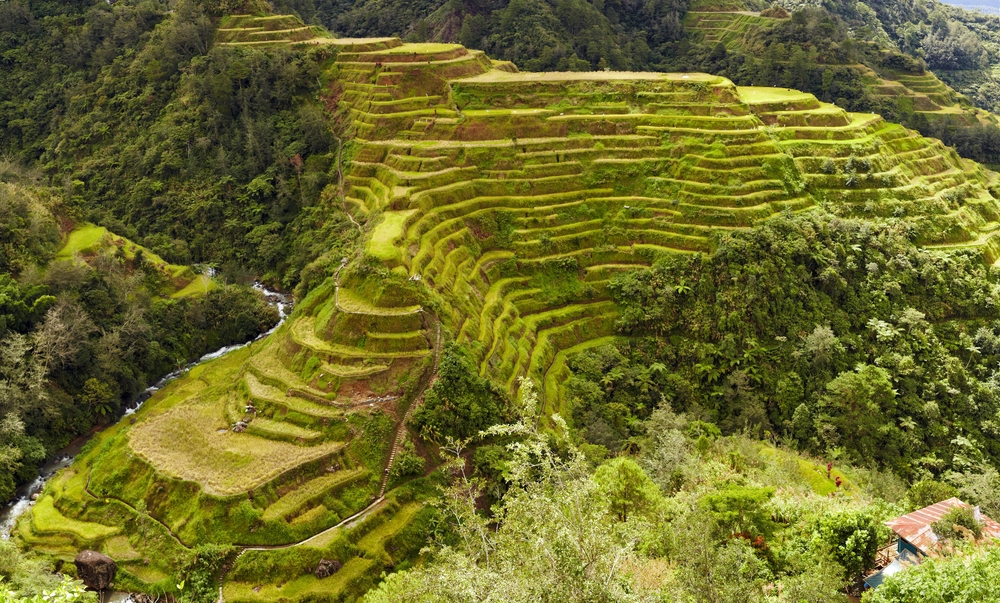
-
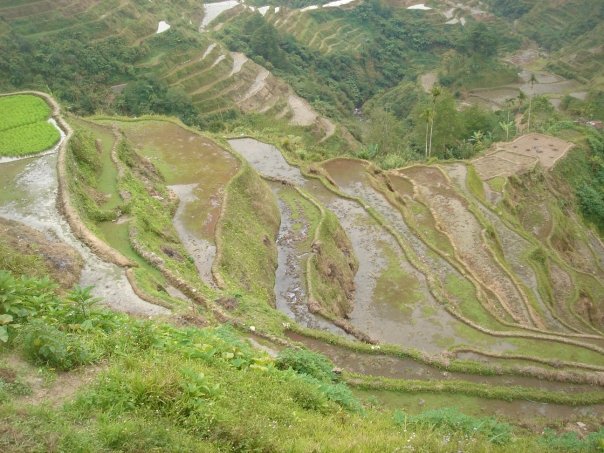
- Batad Rice Terraces
You get there from the Batad saddle, where the jeepney or tricycle drops you off. From there it’s a walk down a path and stone steps into the village, and that first look at the amphitheatre as you come around the bend is worth the trip on its own. Take it easy on the way back up, because it’s all uphill and those steps get old fast.
Once you’re in the village, the best thing you can do is walk the paths along the terrace walls and find a good spot to sit. You don’t need to be a serious hiker for Batad itself, just reasonably fit and happy to go slowly. The walls are narrow, so watch your footing, especially after rain. The viewing platform above the village is where most people get their classic photo, and it’s worth the short climb.
Bangaan Rice Terraces
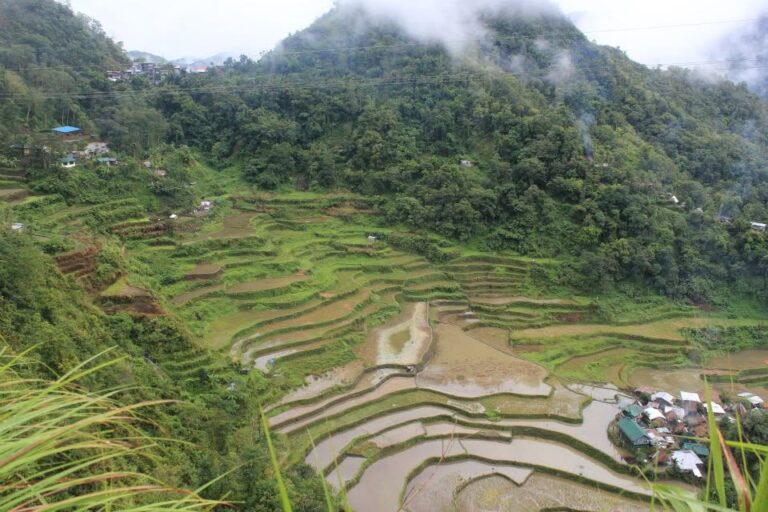
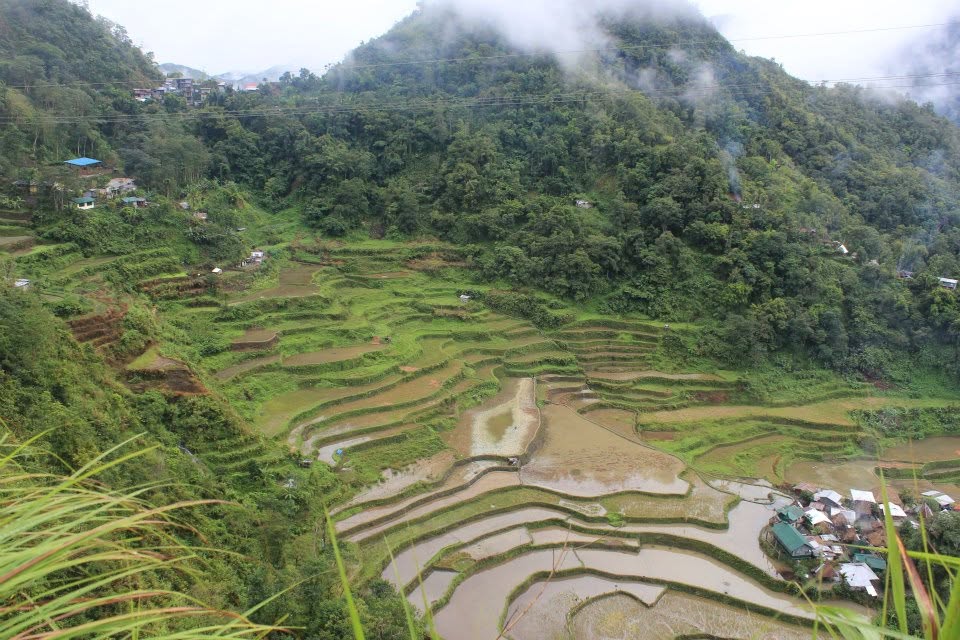
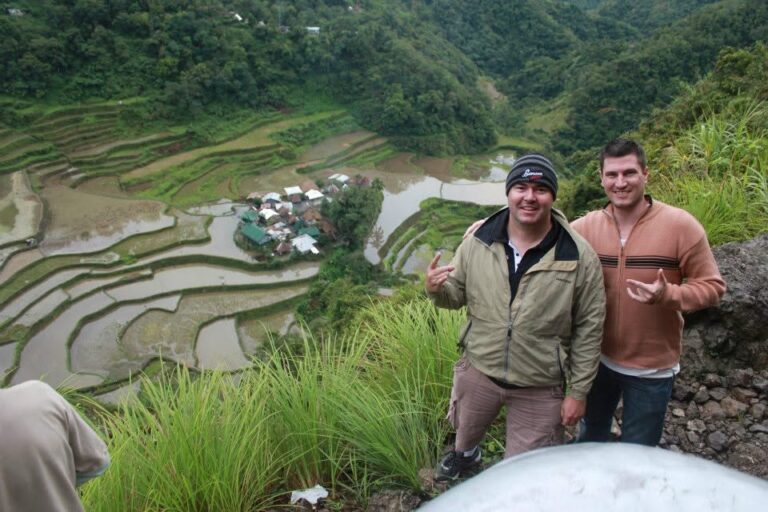
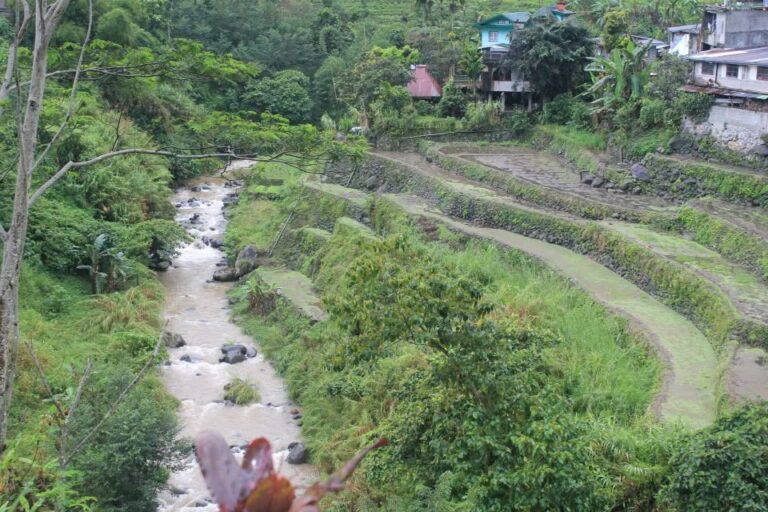
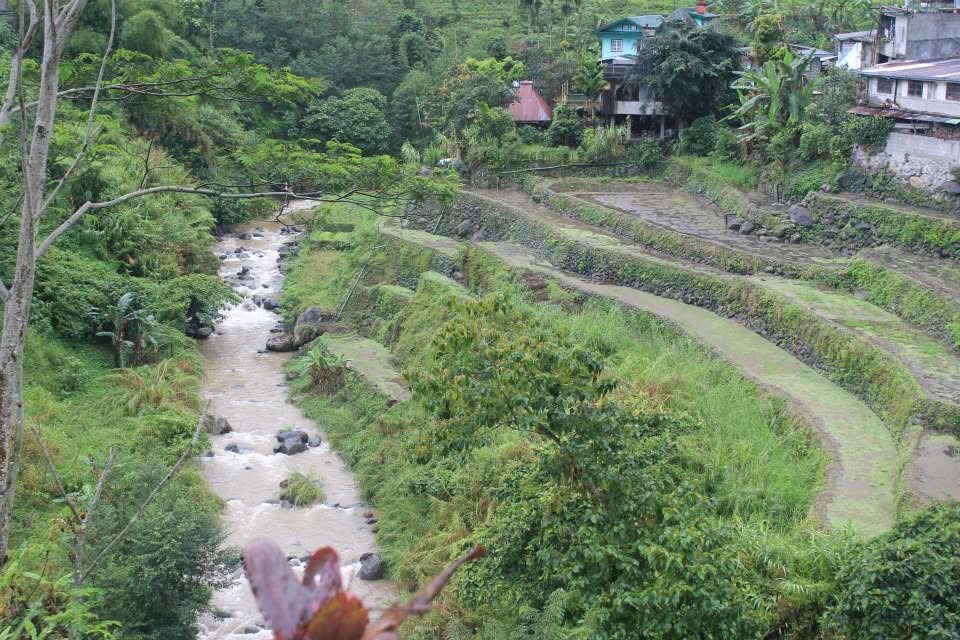
Bangaan is the quieter, easier cousin of Batad. Instead of a giant amphitheatre, you get a small cluster of traditional Ifugao houses sitting in the middle of the terraces, with stone walls climbing the hillside in every direction. It’s part of the same UNESCO World Heritage listing as Batad, and it sits on the road towards Batad, so it’s an easy stop on the way in or out.
-
- Bangaan Rice Terraces
-
- Bangaan Rice Terraces
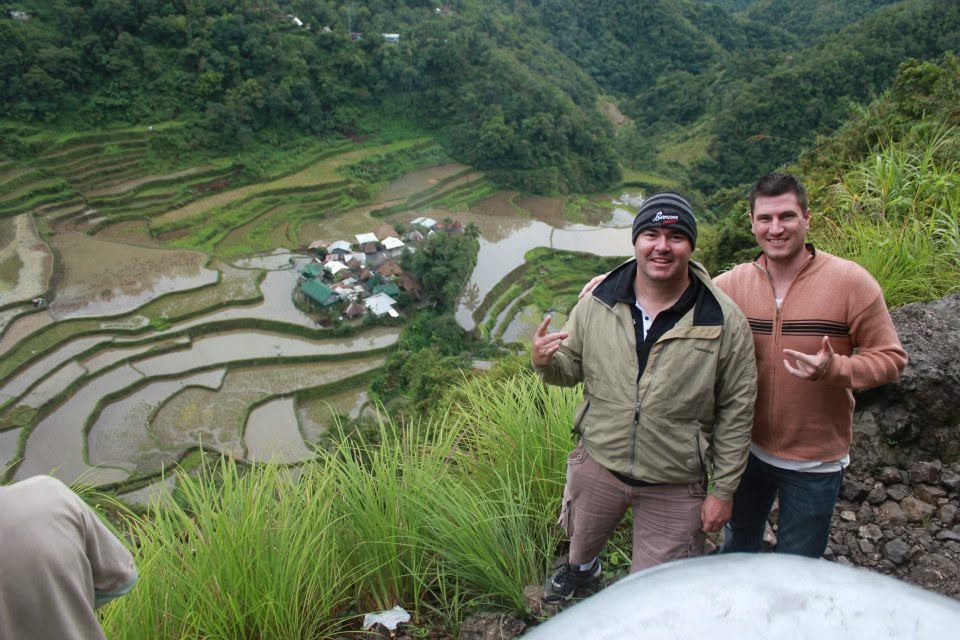
My best views of Bangaan were from above, looking down on the village and the terraces spread out below it. If you want to get closer, there’s a trail down to the village itself, which is a good option if Batad sounds like too much walking. Bring something to drink and keep the camera handy, because the light on the terraces changes quickly. If you’re passing anyway, ask your driver to stop.
Banaue Viewpoints
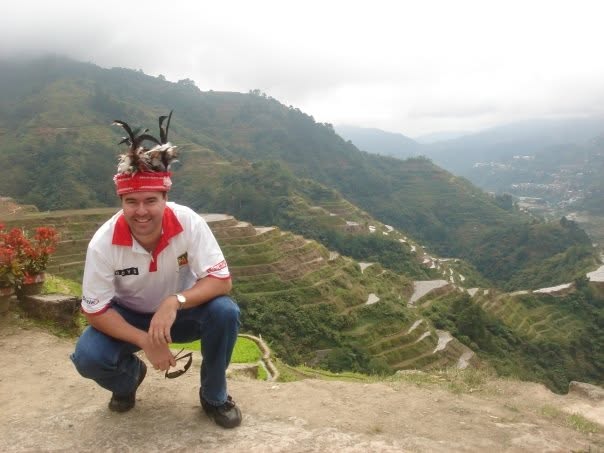
Banaue has a handful of viewpoints within easy reach of town, and for a first-time visitor they’re the simplest way to see the terraces without a long hike. The main viewdeck sits on the highway just outside town, and it’s the one every tour stops at. On a clear morning the terraces stretch away down the valley in layer after layer of green. When the cloud rolls in you get a very different, moodier picture, and in the wet months that’s often what you’ll see.
-
- Banaue Viewpoint
-
- Traditional Ifugao headpiece
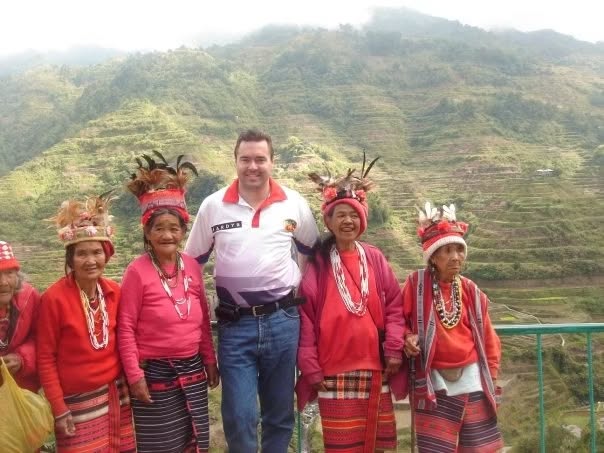
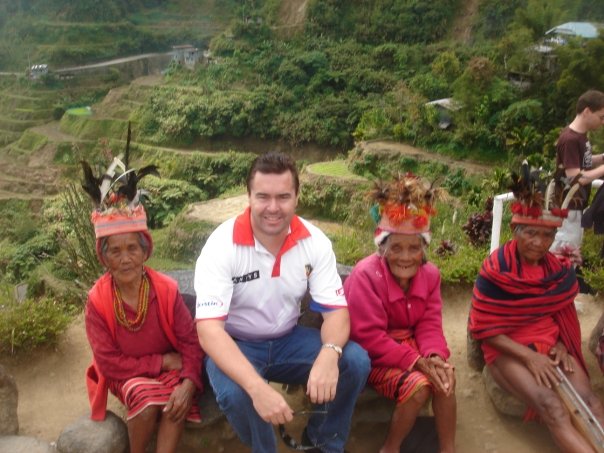
This is also where you’ll find Ifugao elders in traditional dress, happy to pose for photos for a small tip. I couldn’t resist trying on the headpiece myself. Ask first, tip fairly and treat the outfit with respect. Awa View Deck is worth the early morning climb for a different angle (see Day 3 of the itinerary), and the Banaue Welcome Arch is another free spot for a quick look.
Tappiya Waterfall
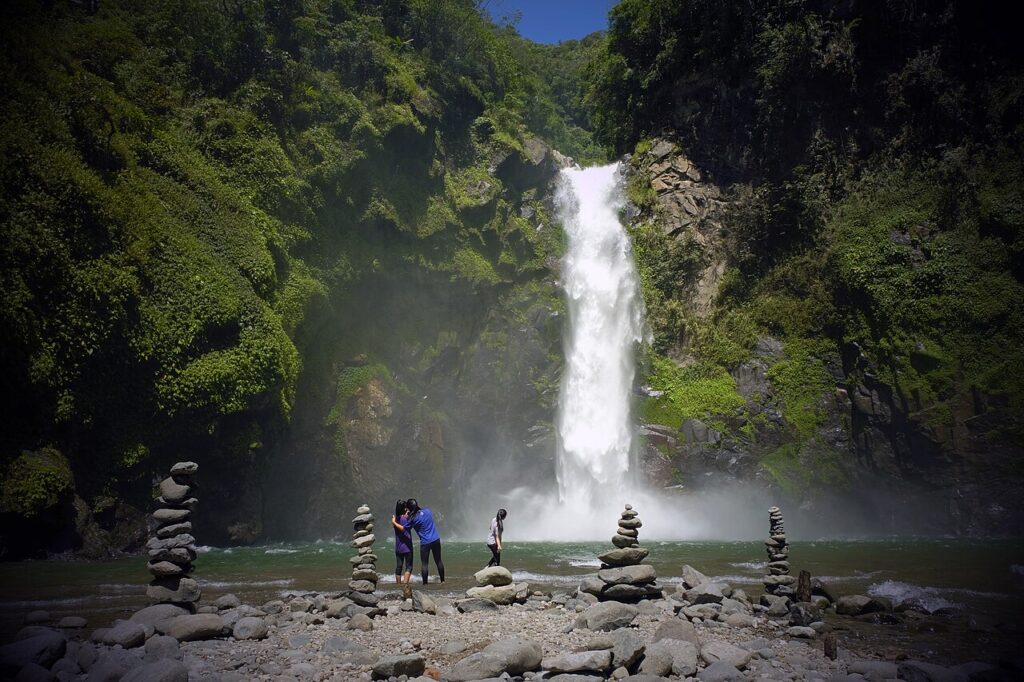
Tappiya Waterfall is the reward for a long walk out from Batad village. The trail winds along the terrace walls before dropping down a rocky path to the falls, where the water crashes into a pool at the bottom. Tappiya is a local word for splash, which tells you most of what you need to know. It’s roughly an hour each way, and the climb back is mostly uphill, so start early, take plenty of water and don’t underestimate it, especially after rain.
The Ifugao People and Their Way of Life
One thing that really impressed me was how the Ifugao people had adapted to living in such a mountainous environment.
You’ve got houses built into the mountainsides, rice fields carved into steep slopes and irrigation systems that have supported communities for generations.
It’s not just the terraces themselves. It’s the whole way of life that has developed around them.
I also had the opportunity to meet some local people, take photographs and learn a little about their traditions. It really is something else and puts a lot of things we take for granted into perspective.
-
- Ifugao people in traditional dress
-
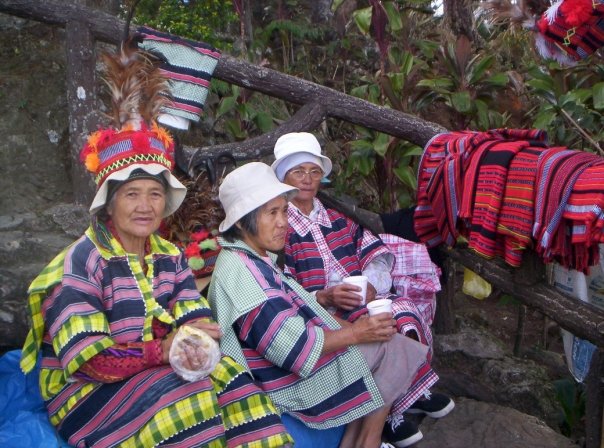
- Ifugao women selling souvenirs
Red Teeth and Moma Spitting Areas
One of the more unusual things I remember was some seeing locals with bright red teeth and mouths.
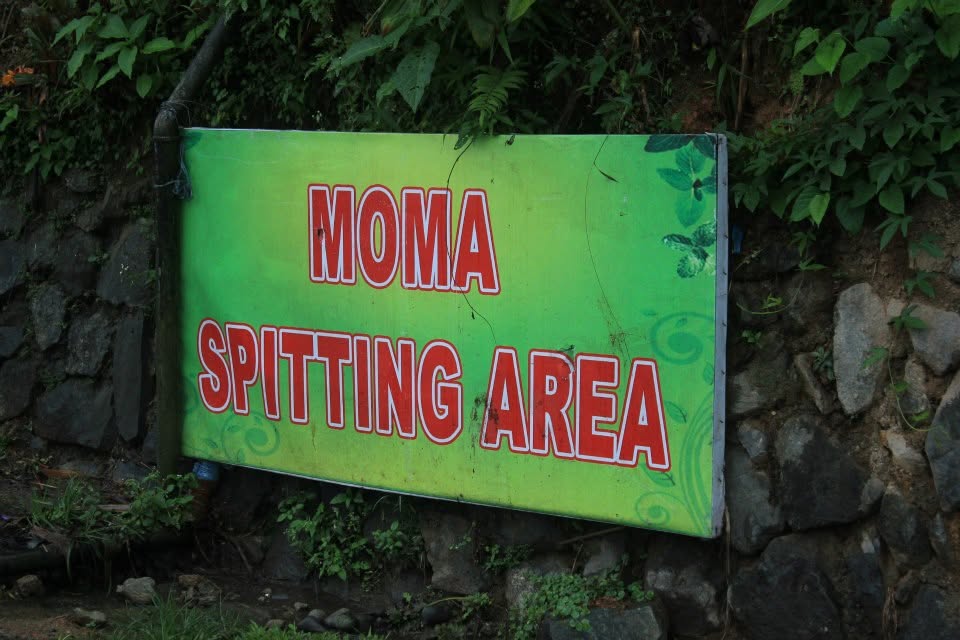
I had absolutely no idea what was going on. Some looked a little out of it but I didn’t realise the connection until I spoke to some locals standing near a sign saying “Moma Spitting Area”.
Naturally, I had to ask someone what that meant.
It turns out that moma is the local name for betel quid, which contains areca nut and other ingredients. Chewing it produces reddish saliva and has a mild stimulant effect.
The designated spitting areas help keep public places clean and prevent red stains.
It’s one of those little cultural experiences that sticks in your mind.
How Many Days Do You Need in Banaue?
I’d recommend at least three nights in Banaue, especially considering the long journey from Manila.
Both times I visited, I stayed for around two nights. That was enough to see some fantastic scenery, but I’d definitely spend longer next time.
And while you’re up in this part of the Philippines, I’d seriously consider continuing on to Sagada in Mountain Province.
Consider Adding Sagada to Your Trip
Sagada is roughly a three-hour drive from Banaue, depending on road conditions. It’s known for:
- The famous hanging coffins in Echo Valley
- Bomod-ok Falls, also known as Big Falls
- Sumaguing Cave and its impressive limestone formations
- Mountain scenery, viewpoints and hiking trails
I haven’t personally visited Sagada, but it’s somewhere I’d definitely include if I returned to Banaue. A couple of nights in each destination would make an absolutely awesome northern Luzon trip.
Sample 3-Day Banaue and Batad Itinerary
Day 1: Overnight Bus and Banaue Town
- Early morning: Arrive in Banaue after the overnight bus from Manila. Check in at your hotel, or leave your bags if the room isn’t ready.
- Morning: Register and pay the environmental fee at the tourism office, have breakfast, then rest.
- Afternoon: Head up to a Banaue viewpoint for your first look at the terraces.
- Evening: Catch the sunset if the weather is clear. Have dinner, and see the cultural show at the Banaue Hotel if it’s on that night.
-
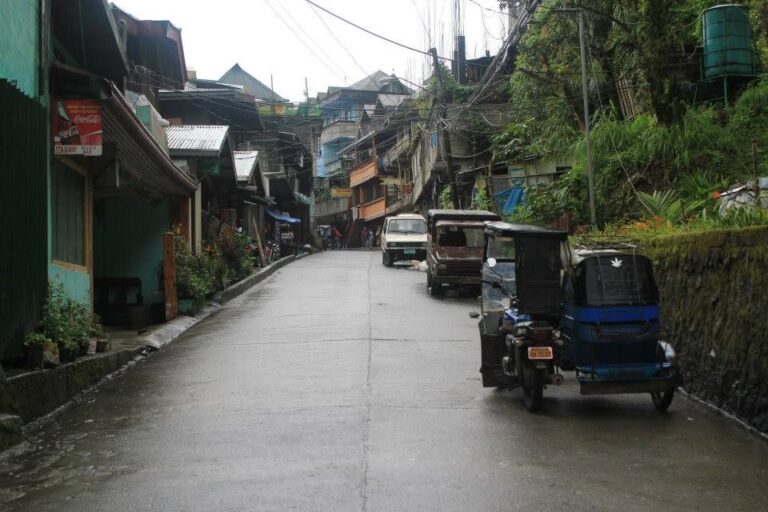
- Banaue Town
-
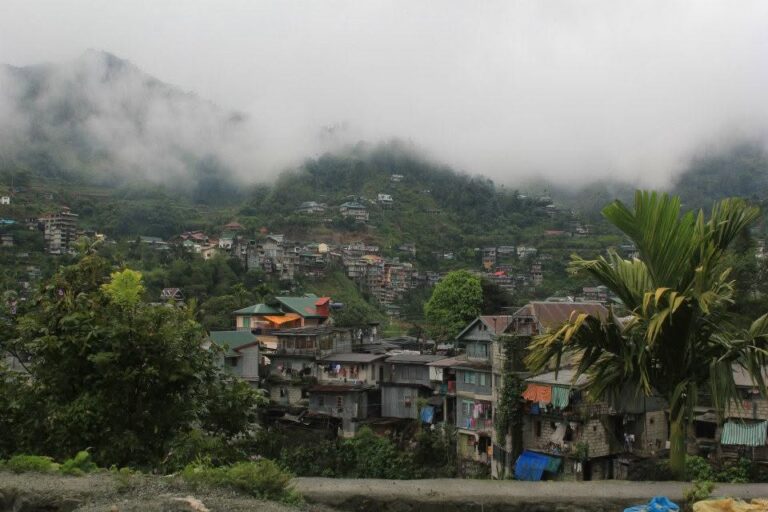
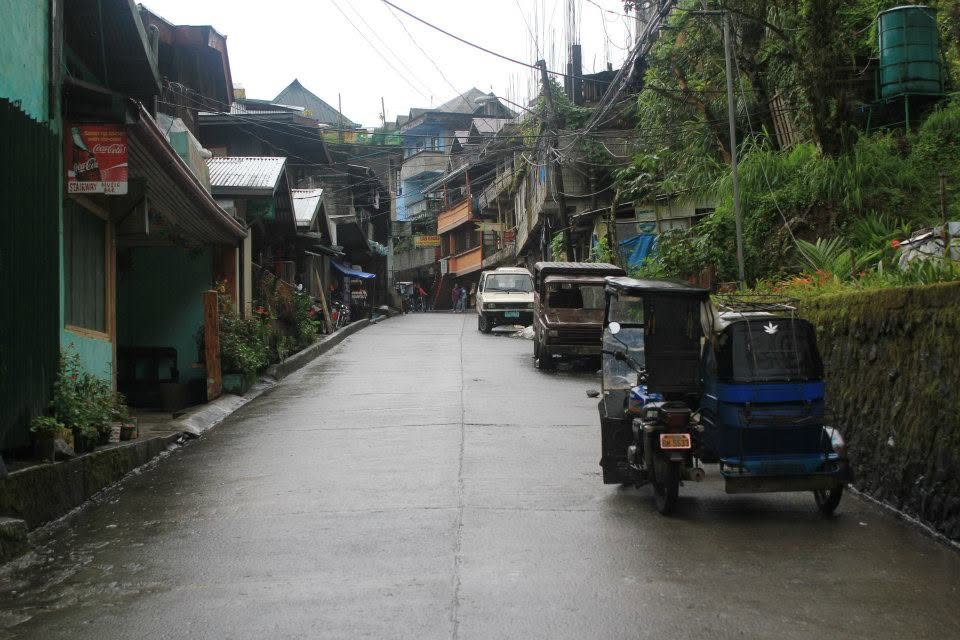
- Banaue Town
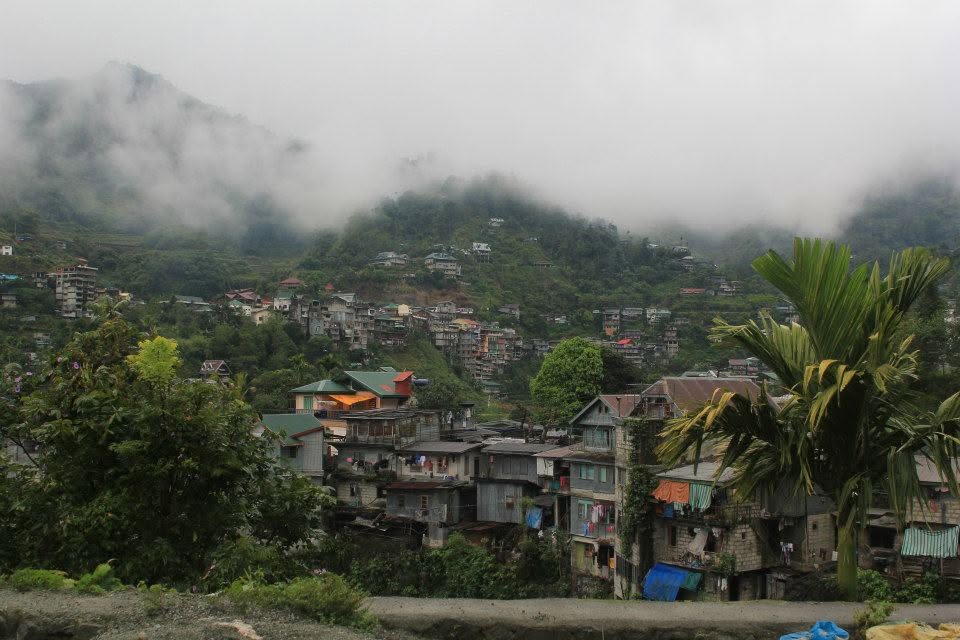
Day 2: Into Batad
- Morning: Have breakfast, then take a jeepney or tricycle to the Batad saddle (about an hour). Schedules are informal, so ask locally the day before.
- Midday: Walk down into the village (20 to 30 minutes), pay the entrance fee and drop your bags at a guesthouse. Have lunch.
- Afternoon: Walk to the amphitheatre viewpoint. If you have the legs for it, hike down to Tappiya Falls for a swim. It’s roughly an hour down and a slow climb back up, so leave early enough to be back before dark.
- Evening: Dinner at the guesthouse and an early night. Batad is basic and gets cool after dark, so bring a layer.
-
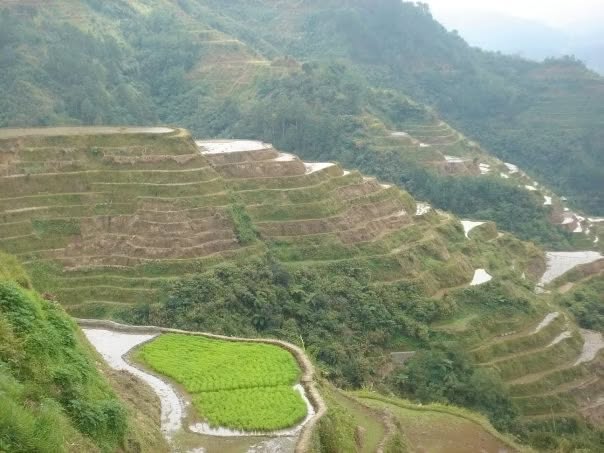
- Batad Rice Terraces
-
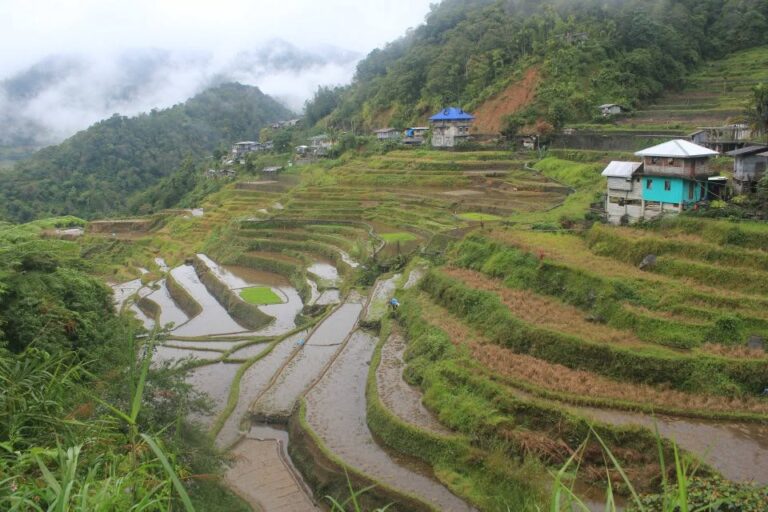
- Batad Rice Terraces
Day 3: Back to Banaue
- Early morning: Climb to Awa View Deck for a different angle on the terraces.
- Morning: Have breakfast, then walk back up to the saddle and take a jeepney or tricycle to Banaue.
- Afternoon: Lunch and free time in town, and a last look at the viewpoints.
- Evening: Buses back to Manila leave around 6 to 7pm. Or stay a second night in Banaue and leave the next day.
Got two extra days? Swap Day 3 for the start of the Batad to Cambulo and Pula hike, and add a day back in Banaue at the end.
-
- Banaue Town
-
- Banaue Town
Where to Stay in Banaue
Banaue Hotel
I’ve stayed at Banaue Hotel on both visits, and it’s a good base for exploring the area. It’s certainly not five-star accommodation, but it’s well-kept, has a nice traditional feel and offers some great mountain views.
There are also smaller inns around Banaue town. The itinerary above has you sleeping in one of the basic guesthouses in Batad itself, which puts you right at the terraces for sunset and sunrise.
How to Get to Banaue
Banaue is roughly 350 kilometres from Metro Manila, depending on where you start.
- By car: Allow around 9 to 11 hours from Manila, depending on traffic, stops and road conditions. Both times I visited, we drove, and I drove my own car on the second trip.
- By bus: Coda Lines operates from Cubao, while Ohayami Trans operates from Sampaloc. Overnight services generally take around 9 to 10 hours, with schedules and fares subject to change.
- From Baguio: You can also travel overland via the Cordillera mountain roads, although this is a considerably longer journey than it might appear on a map.
Once in Banaue, you can hire a jeepney or tricycle to explore the surrounding viewpoints and villages. Batad requires a walk from the road into the village.
What to Budget in Banaue
I won’t get into every peso, because prices change, but it helps to know what to expect.
- Environmental fees: There is usually a small environmental or registration fee at the Banaue tourism office and another when you enter Batad village. They’re modest, typically in the tens of pesos per person.
- Transport: The overnight bus from Manila is typically under ₱1,000 each way. Local jeepneys are cheap, while a tricycle or a chartered jeepney costs more but gets split between your group.
- Guides: A local guide for the Tappiya Waterfall or longer hikes is typically around ₱500 to ₱1,000 per day, split between your group.
Whichever terraces you visit, expect some sort of small charge, so keep a bit of cash handy. Check current fees locally before you go.
Good to Know Before You Go
- Fog and mist can affect visibility, even during the generally drier months.
- Take enough cash, and check ATM availability before leaving the bigger towns.
- Evenings can get surprisingly cool, particularly during the colder months, so make sure you bring a jacket.
- Mountain roads can be narrow, winding and affected by landslides or roadworks.
- Bring comfortable walking shoes and a warm layer for the cooler evenings.
- Ask permission before entering rice fields or photographing local people.
Dezza’s Tip
If somebody asked me to recommend three places to visit in the Philippines, I’d say Banaue, El Nido and Bohol.
Think about the diversity. You’ve got the ancient rice terraces and mountain culture of Banaue, the limestone cliffs and lagoons of El Nido, and the Chocolate Hills, tarsiers and beaches of Bohol.
Three completely different experiences, and all absolutely awesome.
As for Banaue, I’ve been twice and I’d happily go again. Next time, I’d spend a bit longer exploring the terraces and then continue up to Sagada. If you’re going to make the long journey into the mountains, you might as well make the most of it.
You Might Also Like
 El NidoLimestone cliffs, lagoons and island hopping in northern Palawan.
 BoholThe Chocolate Hills, tarsiers, the Loboc River and white sand beaches on Panglao.
 CoronIsland hopping, clear lagoons and wreck diving in northern Palawan.
 BoracayPowdery white sand, great sunsets and island hopping in the Visayas.